Product details description
Microfiber cleaning cloths have revolutionized the cleaning industry with
their superior ability to trap dust, dirt, and grime, making them a staple in
both residential and commercial cleaning. However, with a wide range of options
available—varying in fiber type, density, weave, and size—determining the best
microfiber cleaning cloth can be a daunting task. The "best" cloth is not a
one-size-fits-all solution but rather one that aligns with specific cleaning
needs, whether for delicate surfaces, heavy-duty scrubbing, or streak-free
polishing. Understanding the key factors that define high-quality microfiber
cloths is essential for selecting the right one for any cleaning task.
Fiber composition is a foundational factor in determining the quality of a
microfiber cleaning cloth. The best microfiber cloths are typically made from a
blend of polyester and polyamide (nylon), with a ratio of 80:20 or 70:30.
Polyester provides durability and dust-trapping capabilities, while polyamide
enhances absorbency and softness. Avoid cloths made from 100% polyester, as they
are less absorbent and may not be as gentle on delicate surfaces. High-quality
fibers are also split—meaning the individual strands are divided into smaller
microfibers—creating a larger surface area to trap and hold debris. Unsplit
fibers, by contrast, are less effective at cleaning and are often found in
lower-quality cloths.
Fiber density, measured in grams per square meter (GSM), is another
critical indicator of a microfiber cloth’s performance. The best cloths have a
GSM rating between 200 and 400. Cloths with a higher GSM (300-400) are thicker,
more absorbent, and durable, making them ideal for heavy-duty cleaning tasks
like scrubbing floors, cleaning kitchens, or wiping up large spills. Lower GSM
cloths (200-250) are lighter and more flexible, suitable for delicate surfaces
such as glass, mirrors, electronics, and automotive finishes. A higher GSM also
ensures that the cloth retains its shape and effectiveness after multiple
washes, whereas lower GSM cloths may fray or lose their cleaning power
quickly.
Weave pattern plays a significant role in the cloth’s cleaning performance
and versatility. The best microfiber cloths feature either a looped weave or a
split-twill weave. Looped weave cloths have tiny loops that are highly effective
at trapping dust and debris, making them ideal for dry dusting or cleaning
textured surfaces. Split-twill weaves are softer and more absorbent, perfect for
wet cleaning, streak-free polishing, and cleaning delicate surfaces like
eyeglasses or smartphone screens. Avoid cloths with a plain or non-woven weave,
as they are less durable and effective. Additionally, high-quality cloths have
tight stitching to prevent fraying, ensuring longevity and consistent
performance.
The best microfiber cleaning cloth also offers practical features that
enhance usability. Look for cloths that are lint-free, as lint can leave residue
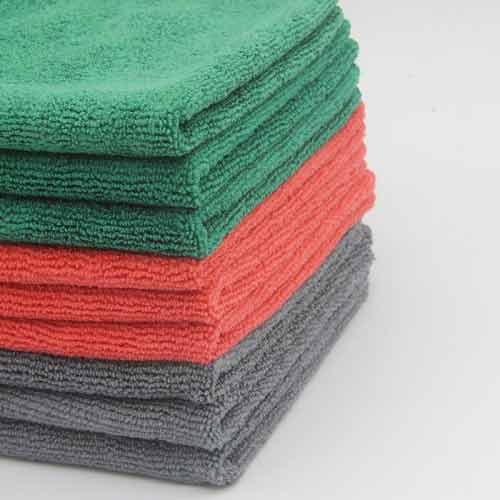
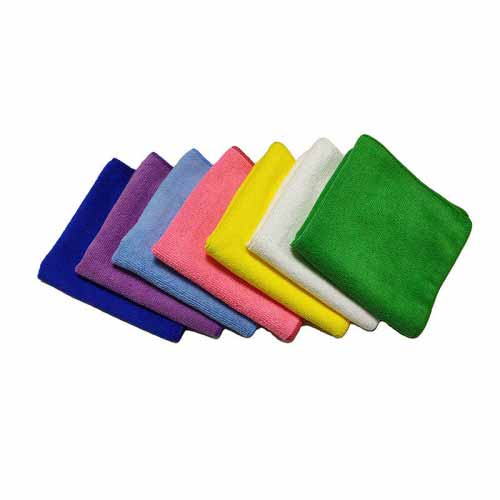
on surfaces, defeating the purpose of cleaning. Color-coded cloths are useful
for preventing cross-contamination, allowing users to assign specific colors to
different areas (e.g., blue for kitchen, red for bathroom). Reusability is
another key feature—high-quality microfiber cloths can be washed hundreds of
times without losing their effectiveness, making them an eco-friendly
alternative to disposable wipes. Finally, consider the size of the cloth: larger
cloths (16x16 inches or more) are ideal for large surfaces, while smaller cloths
(12x12 inches) are better for detailed cleaning tasks. By evaluating these
factors, you can select the best microfiber cleaning cloth that meets your
specific cleaning needs.
Previous article:
Microfiber Cleaning Cloth with High-Density Fibers - Superior Dust Trapping
Next article:
Microfiber vs Cotton Cloth Comparison: Absorbency, Durability, and Cleaning Performance