Characteristics of Microfiber Towels
Release time:2025-09-28 Click:60
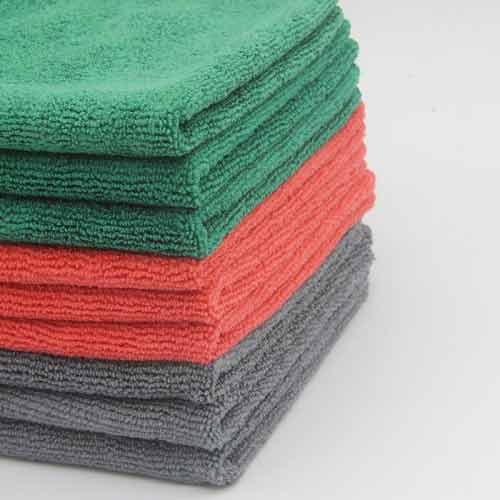
With a diameter of only 0.4 micrometers, microfiber is one-tenth the thickness of silk. Microfiber towels, made from imported knitted fabrics, have a uniform, compact, soft, and highly elastic surface, and have excellent dirt removal and water absorption capabilities. They do not damage the surface being wiped and do not shed fibers like cotton towels. Compared to traditional cotton towels, microfiber towels have six major advantages:
High absorbency: Microfiber uses a segmented technology to divide the filaments into eight segments, increasing the surface area of the fiber and the number of pores in the fabric, enhancing the capillary wicking effect and allowing for rapid water absorption and drying.
Strong cleaning power: With a diameter of only 0.4 micrometers, microfiber can more effectively capture dust particles as small as a few micrometers, making it excellent for removing dirt and oil.
No shedding: The high-strength synthetic fibers are not easily broken, and the fine knitting process prevents the fibers from unraveling or shedding. Microfiber cleaning cloths and car towels are especially suitable for wiping glossy painted surfaces, electroplated surfaces, glass, instruments, and LCD screens. They can achieve ideal cleaning effects during car window film installation.
Long lifespan: Due to their high strength and toughness, microfiber towels have a lifespan that is more than four times that of ordinary towels. They remain unchanged after multiple washes. In addition, the polymer fibers do not undergo protein hydrolysis like cotton fibers, and even if they are not dried after use, they will not mold or rot.
Easy to clean: When using ordinary towels, especially natural fiber towels, dust, oil, and dirt from the wiped surface are directly absorbed into the fibers. After use, they remain in the fibers and are difficult to remove. After prolonged use, they may even become hard and lose elasticity, affecting their use. Microfiber towels, on the other hand, adsorb dirt between the fibers (rather than inside the fibers), and due to their high fiber fineness and density, they have strong adsorption capacity. After use, they can be easily cleaned with water or a small amount of detergent.
Colorfast: The dyeing process uses dyes such as TF-215 that are specifically designed for microfiber materials. Their slow dyeing, migration, high-temperature dispersion, and fading properties meet the strict standards of the international export market. In particular, their colorfastness ensures that they will not cause color contamination when cleaning surfaces.
Previous article:Let’s take a look at some common symptoms that may indicate a failing alternator
Next article:Essential tools for wiring a car stereo without a harness
Hot products
Mobile: +86 15097722953
Email:metalproducts2021@163.com
Email:1755383270@qq.com