The Superiority of Microfiber Cloth for Culinary Spaces
Release time:2026-02-28 Click:10
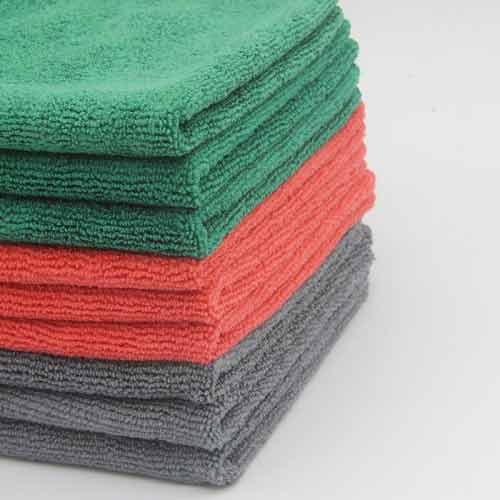
Microfiber cloth kitchen, a game-changer in culinary cleaning, uses ultra-fine fibers to tackle grease, grime, and bacteria with unmatched efficiency. Comprising polyester and polyamide (nylon) in a 80:20 ratio, these cloths have fibers 1/20th the diameter of human hair, creating a massive surface area for absorption. In kitchens, where hygiene and speed are critical, their ability to clean without chemicals or residue makes them indispensable for countertops, appliances, and cookware.
The technology behind microfiber cloth kitchen lies in its fiber structure. Each cloth contains millions of microfibers, split into even finer “split fibers” during manufacturing. This split structure increases surface area by 10x, allowing the cloth to absorb 7x its weight in liquid. The polyamide component provides softness, while polyester adds durability. Some variants are treated with silver ions for antimicrobial properties, killing 99% of bacteria (E. coli, Salmonella) within 24 hours. The cloths are also electrostatic, attracting dust and grease particles.
Applications of microfiber cloth kitchen are tailored to culinary needs. For countertops, they remove sticky spills (syrup, oil) without streaking, unlike paper towels. Appliances (microwaves, refrigerators) are wiped clean, with the cloth reaching into crevices. Cookware (stainless steel, non-stick) is scrubbed without scratching, and glassware is polished to a streak-free shine. Even oven doors and range hoods, covered in baked-on grease, yield to the cloth’s absorption. For sanitizing, a dry cloth removes 98% of germs, reducing reliance on harsh chemicals.
Advantages of microfiber cloth kitchen over traditional cleaning tools are profound. Unlike sponges, they don’t harbor bacteria in pores, reducing cross-contamination. Cotton cloths leave lint on glass and stainless steel, while microfiber leaves none. They are reusable (washed 100+ times) and cost-effective—one cloth replaces 10 rolls of paper towels. For eco-conscious kitchens, they reduce waste and chemical use. The soft texture is safe for non-stick surfaces, unlike abrasive scouring pads.
Using microfiber cloth kitchen correctly enhances performance. For dry cleaning, use a dry cloth to attract dust and crumbs. For wet cleaning, dampen with water (no soap needed for light messes) and wipe in circular motions. For grease, a small amount of dish soap boosts absorption. Fold the cloth into quarters to use clean sections, and avoid using fabric softener (which clogs fibers). In dishwashers, wash on a gentle cycle with mild detergent, air-drying to maintain fiber integrity.
Maintenance and selection of microfiber cloth kitchen ensure longevity. Choose cloths labeled “kitchen-grade,” with a tight weave for durability. Store in a dry place to prevent mildew. Inspect for fraying edges (replace when worn) and wash separately from lint-producing fabrics (cotton). As innovation continues, color-coded cloths (red for meat, blue for surfaces) prevent cross-contamination. This small cloth, thus, elevates kitchen hygiene, making cleaning faster, safer, and more sustainable.
Previous article:Ultra Absorbent High-Performance Microfiber Cloth for Spills
Next article:Soft-Touch Plush Microfiber Cloth for Gentle Car Exterior & Interior Detailing
Hot products
Mobile: +86 15097722953
Email:metalproducts2021@163.com
Email:1755383270@qq.com